
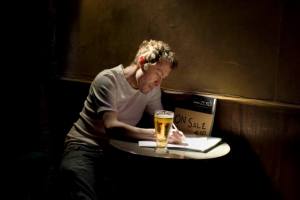
 I’m a psychotherapist by day and a poet by night, and spoken word poetry is my passion. Both for the words and for the power of a performance that reaches out from the stage and touches your soul.
The world seemed drab and dismal, back in the day, so I set off wandering around Europe, high on Kerouac’s promise of meeting life on the road… My head too full of George Orwell, down and out in Paris and London, of Laurie Lee, who walked out one midsummer morning, of Christopher McCandless who wandered into the wild and never came back. Of Arthur Rimbaud in his season in Hell and Allen Ginsberg’s 1950s angelheaded hipsters burning for the ancient heavnely connection to the starry dynamo in the machinery of night…
I stumbled into Paris, expecting to get itchy feet in a few months. At least I knew a few words of this language. I slept in the Russian section at Shakespeare and Company and my best friend was a Moldovan folk musician who’d hitched around Europe with his cello on his back. And for the first time in my life I met people infected with the same madness – the conviction that nothing really mattered except the music of the words, the writing, books…
I started reading my free verse at open mic music nights between the songs. Soon a handful of us were doing it. And upstairs in the bookshop itself, in George Whitman’s twilight when an old British radio journalist, John Kirby Abrahams, ran a dying and neglected reading series.
I checked out The Live Poets Society at The Highlander (”The Live Poets Societ does not exist…”) but was too scared to ask to read, I didn’t think I was good enough. I went to French slam nights, but no one could understand my poems.
So, just because no other bugger was doing it, I started the only Paris open mic poetry night in English, and it’s still running more than a decade later. This is SpokenWord Paris. Where so much of the current Paris anglo-poetry scene has grown from.
Why? Because I wanted to share my words. And because I wanted to hear others’ words. Because, one of the first times I read, someone handed me a note saying ”This is what I came to Paris for.” (Unknown stranger, if you had not done this, would any of the rest have happened..?)
Why? Because of the poems I loved when I was growing up in England. Because at school we were poets at the age of 7. Because you have to follow the call when you hear it, when something calls you by your name, your secret name…
Because writing is lonely and I needed to be heard…
Because home is folk who share your craziness…
Because no other bugger was doing an open mic poetry night in English. And because I discovered that if you pour your passion into something, people respond…
…
So here is one of those early poems from back in the day, in Paris. It seems weirdly prophetic now.
ink is blood
ink is blood that courses through the arteries of the mind
containing all colours within its darkness
flowing in search of light and release
to the rhythmic pulse of the heart
words are shorthand for experience and imagination
a currency of vision and desire exchanged without loss
words are the seed crystals that drop into the jar that contains the soul
and expand into fractal mosaics
they are lights in the dark
syllables that touch off recollection of other voices
that re-ignite un-memories in the inaccessible corners of the heart
when I was born I drank a cup of black ink and now I bleed words
my mind is full of words and photographs of unreality
and I can see there is a wall of water coming
I know it by the pressure in my ears
by the sound of the shore
by the harmonic vibration of every water molecule in every cell of my body
in sympathetic echo
there is a wall of water coming and it will break in the mind
these tears that trace the outline of my face
are only the first brimming over of the flood
the false breaking before the wave comes.
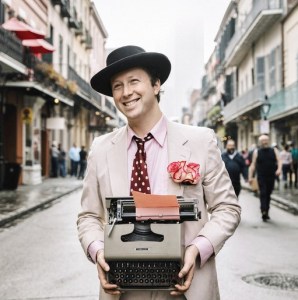 Benjamin Aleshire

 Originally from New England, Hassan Melehy lived all over the United States before settling in North Carolina in 2004. His poems have appeared in The Hat, nthposition, Borderlands, and Redheaded Stepchild, among other journals. His first collection, A Modest Apocalypse, was published by Eyewear in 2017. His verse is eclectic but owes more to experimental practices, from the sixteenth century to the present, than anything. The son of immigrants, one from western Europe and the other from the Middle East, he sometimes writes about his experiences as a second-generation American. In addition to his creative writing he has written three books of literary criticism, most recently Kerouac: Language, Poetics, and Territory (Bloomsbury, 2016). He lives in Chapel Hill, NC with his wife, Dorothea Heitsch, and teaches French and Comparative Literature at UNC.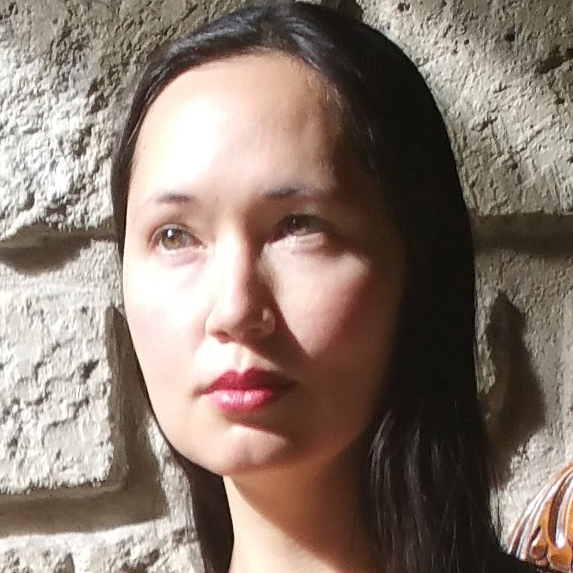

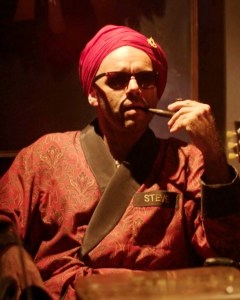
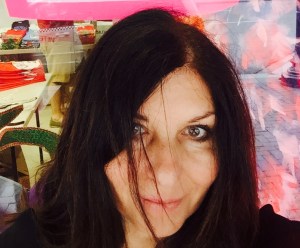 Adeena Karasick is a New York based Canadian poet, performer, cultural theorist and media artist and the author of eight books of poetry and poetics. Her Kabbalistically inflected, urban, Jewish feminist mashups have been described as “electricity in language” (Nicole Brossard), “proto-ecstatic jet-propulsive word torsion” (George Quasha), noted for their “cross-fertilization of punning and knowing, theatre and theory” (Charles Bernstein) “a twined virtuosity of mind and ear which leaves the reader deliciously lost in Karasick’s signature ‘syllabic labyrinth’” (Craig Dworkin); “one long dithyramb of desire, a seven-veiled dance of seduction that celebrates the tangles, convolutions, and ecstacies of unbridled sexuality… demonstrating how desire flows through language, an unstoppable flood of allusion (both literary and pop-cultural), word-play, and extravagant and outrageous sound-work.” (Mark Scroggins). Most recently is Checking In (Talonbooks, 2018) and Salomé: Woman of Valor (University of Padova Press, Italy, 2017), the libretto for her Spoken Word opera co-created with Grammy award winning composer, Sir Frank London. She teaches Literature and Critical Theory for the Humanities and Media Studies Dept. at Pratt Institute, is Poetry Editor for Explorations in Media Ecology, 2018 Andrew W. Mellon Foundation Award recipient and winner of the 2016 Voce Donna Italia award for her contributions to feminist thinking. The “Adeena Karasick Archive” is established at Special Collections, Simon Fraser University.
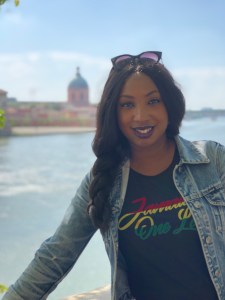 Hanniffa Patterson is a Jamaican who has lived in Paris for over 6.5 years and in France for 8. She has been writing and hoarding her poetry since she was 5 years old, but truly got the courage to share her work 6 years ago at Spokenword Paris. Since then she‘ll read for whoever will listen.

 SpokenWord Paris